
Sidemount Escape to Closed Guard
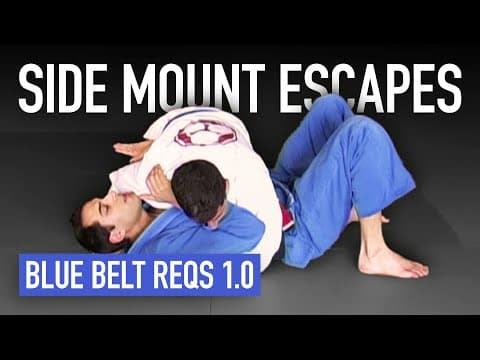
The foundational sidemount escape used when the opponent is pressing down. It relies on lifting the opponent's chest with forearm pressure and using a hip bridge to insert the shin and recover guard.
4 steps
· save to drill into each- 1Establish posture by wedging your forearm under the opponent's neck and placing your palm on their shoulder.0:22
- 2Bridge your hips up and fall outward, inserting your shin fully between you and the opponent.0:52
- 3Push your shoulders back to square your body and pull the opponent's near arm out of position.0:58
- 4Drop your foot and make one final hip movement to swing your leg around into closed guard.1:06
From the source video
Related techniques
- Escape·Side ControlEscape from Side Control (2)
Escape side control by managing posture, using foot placement, hand positioning, and directional movement to create space and recover guard.
- Escape·Side ControlCross Side Escape to Street Guard
An escape from cross-side that uses lat engagement to turn the body past 50%, followed by a shrimp and knee drive to establish Street Guard. This solves the pr…
- Escape·Side ControlSide Control Escape — Hip Recovery
Used when you have space to create a hip escape. The core mechanism is using forearm frames to push the opponent's hips away while extending the leg to create…
- Escape·Side ControlEscape from Side Control (2)
A strategic escape from side control by setting up your body to use your opponent's movement against them.
- Escape·Side ControlElbow Push Escape to Top
Use when the opponent throws their arm to the opposite side to escape your frame. Frame inside the elbow and tricep, push them across your lap, and stand to to…
- Escape·Side ControlSide Control Escape to Offensive Guard
Escape traditional side control by tucking the head, placing the leg inside, and using an armpit clamp to create space, transitioning directly into an offensiv…

Then the round started — and you forgot it.