
Kimura from Rear Clinch Escape
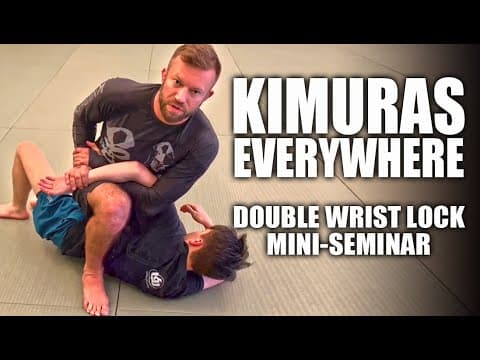
Use this when caught in a standing rear clinch, commonly seen in MMA. It solves the problem of escaping the dominant position while simultaneously countering with a submission. The mechanism is breaking their grip through hip pressure and thumb control, ducking under to thread the arm, then using a pistol squat throw to reverse position and land in top side control with the Kimura secured.
7 steps
· save to drill into each- 1Opponent establishes rear clinch from standing10:39
- 2Push the thumbs down and walk your hips forward to break the grip10:43
- 3Maintain cross-side grip on the wrist10:48
- 4Duck and get your hand inside10:51
- 5Step and hook their waist11:01
- 6Pistol squat and throw them over your head11:05
- 7Land in top side control and finish the Kimura11:16
From the source video
Related techniques
- Escape·StandingStanding Grip Break to Stand Up
Use a cross-grip to control the opponent's arm while creating space to stand up. This technique prevents ground engagement by leveraging grip separation to fac…
- Escape·StandingStanding Headlock Escape to Side Control
Escape a standing headlock by creating a leg frame to stop the choke, waiting for the opponent to relax, then bridging and turning to take side control. Solves…
- Escape·StandingGetting Up to Base
Teaches how to stand up from a seated or fallen position without being pushed back down, using a wide base and proper foot placement to maintain stability agai…
- Escape·StandingRear Naked Choke Escape — Early Wrist Control
Used when the choke is just starting. Control the wrist or thumb and tilt the shoulder to break the choke's pressure before it tightens.
- Escape·StandingRear Naked Choke Escape — Eye Strike or Jump
Used when the choke is fully locked in. Use a desperate eye strike or a vertical jump to force the attacker to release out of self-preservation.
- Submission·StandingRear Naked Choke — Arm Drag Entry
Use this when an opponent charges or closes distance aggressively. It solves the problem of being trapped on the center line by using an off-center angle to dr…
Then the round started — and you forgot it.