
Triangle Prevention and Early Posture Escape
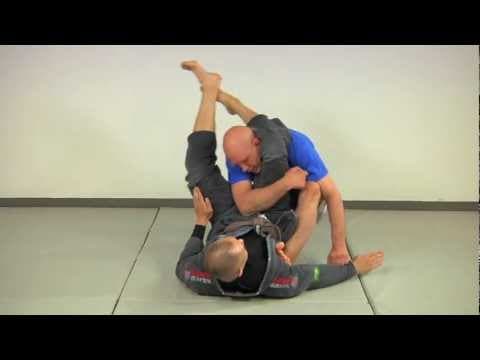
Use this rule any time you're inside someone's guard—it prevents most triangle entries. When caught early with ankles just crossed, immediate posture and specific hand positioning break the position before it locks. The prevention rule eliminates the setup; the posture escape attacks the incomplete lock.
5 steps
· save to drill into each- 1Follow the two-hands rule: keep both hands above or outside the legs, OR both hands under the legs—never one over and one under0:20
- 2When caught with ankles crossed but not locked, immediately posture up with head up, eyes up, and body extended1:28
- 3Reach up with both hands and pull the top leg open to break the crossed ankles1:50
- 4Lock both hands together, push down on opponent's belly, and look up at the ceiling2:00
- 5In gi, grip the pants at the back and grip the lapel to create sandwich pressure2:22
From the source video
Related techniques
- Defense·GuardGuard Punch Block Stages 1-5
A five-stage system for surviving ground-and-pound from the guard by managing distance and using leg positioning to block strikes.
- Defense·GuardAmericana Defense from Closed Guard
Prevents the Americana by maintaining a straight arm and using a cross-waist frame with a hard bridge to extract the elbow. Adapts to leg hooks by standing the…
- Defense·GuardGuard Elbow Defense via Knee Angles
Defends top pressure by moving knees laterally like windshield wipers to shift the opponent's weight and weaken their arm structure. This creates space to cont…
- Defense·GuardGuillotine Defense - Inside Knee Position Method
When caught in a guillotine with their guard locked, inside knee position solves the finishing sequence by forcing them onto their far hip. This disrupts their…
- Defense·GuardGuard Retention — Inside Knee Turn Recovery
Used when an opponent has established side control pressure. Frames to create space, hip escapes to break posture, and turns the knee inward to grab the leg an…
- Submission·GuardStandard Triangle Choke
A fundamental triangle from closed guard that prioritizes crushing posture and hip compression over arm control. It works by forcing the opponent's head into t…
Then the round started — and you forgot it.